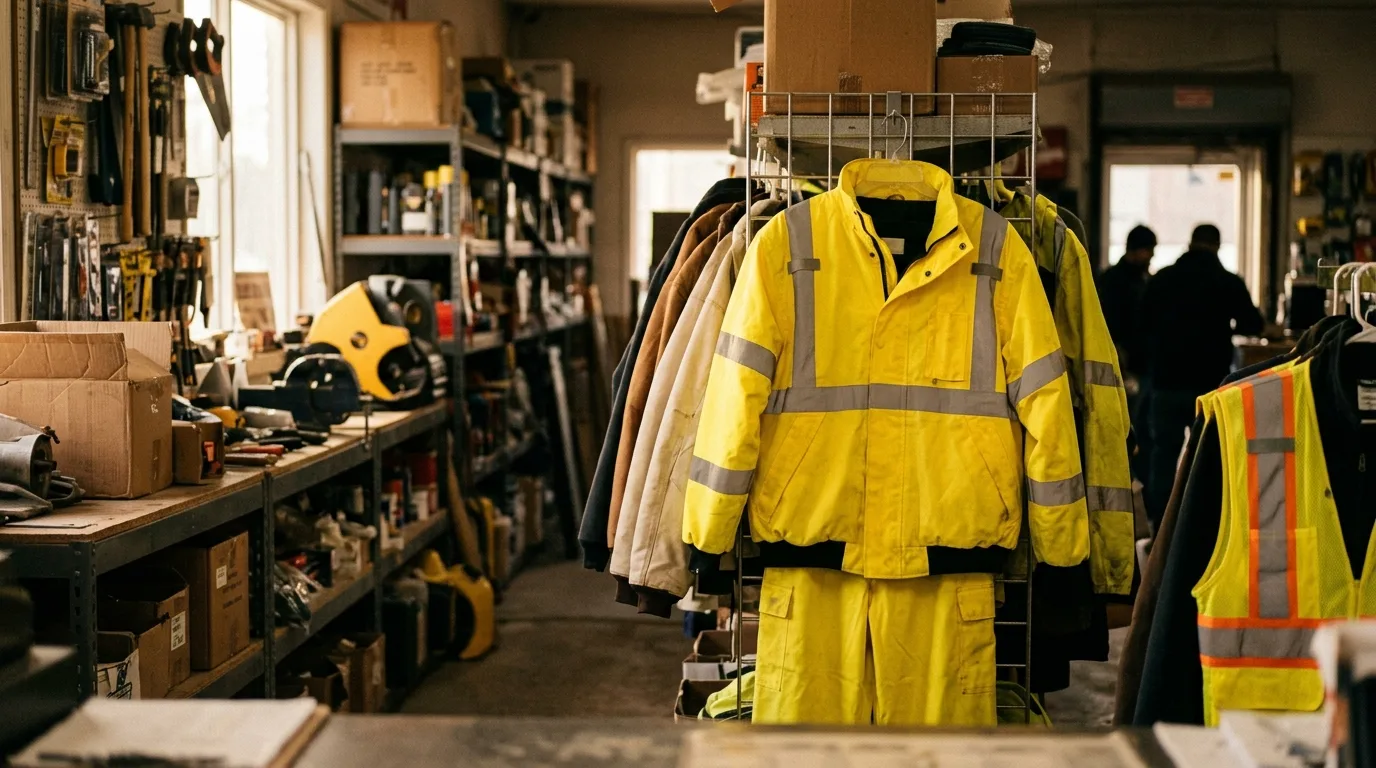
Class 3 hi-vis in Staten Island is in stock at Quazi Supply, 519 Port Richmond Avenue. We carry Class 3 vests, insulated jackets, and waterproof shells from Norti, Carhartt, and our economy mesh lines — full ANSI/ISEA 107 certification, in the size run from small through 5XL. Open 11 to 8, seven days. Same-day pickup, jobsite delivery, and custom printing for crew names and logos.
Class 3 is the highest visibility class in the ANSI/ISEA 107 standard. It exists because some work environments will get a guy hit if he's wearing anything less. Knowing when you need it — and when Class 2 is enough — keeps your crew legal and alive.
The standard breakdown: ANSI/ISEA 107 splits high-visibility apparel into three classes plus a supplemental Class E for pants. Class 1 is for low-traffic environments, parking lots, warehouse yards. Class 2 is the standard construction vest — flaggers, surveyors, general roadside work below 50 mph. Class 3 is the top — highway work, work zones with traffic over 50 mph, low-light or nighttime conditions, utility work near active traffic, DOT-regulated projects.
What makes a vest or jacket Class 3, specifically: minimum 1,240 square inches of fluorescent background fabric (versus 775 for Class 2), and the reflective tape has to wrap the sleeves, the torso, and the shoulders so the silhouette of a human is visible from 360 degrees. A Class 2 vest can leave the sleeves bare. A Class 3 garment cannot. This is why most Class 3 garments are either long-sleeve shirts, jackets, or vests with attached arm bands.
When you legally need Class 3 in New York: any work zone where traffic moves over 50 mph, any nighttime or pre-dawn work near active traffic, any DOT project, most utility work near roads, and many MTA and Port Authority sites. Local DOB may also require it for street-cut work after dusk. If your foreman or PM hands you a vest and says "this is fine," check the tag — if it doesn't say "Class 3" or "ANSI/ISEA 107 Type R Class 3," it's not.
What we stock and who buys it.
Norti insulated Class 3 jackets are our cold-weather workhorse. Quilted lining, hooded options, waterproof shell on most models. Around $120 to $180. Goes to highway crews, utility linemen, and DOT contractors who need to work outside through a New York winter and don't want to layer a separate jacket over a vest. The insulation is rated for sub-freezing without bulking out so much that the reflective tape distorts.
"Order for the heaviest layer the guys will wear that season. If a Class 3 jacket fits over a t-shirt and bunches over a sweatshirt, the visibility is compromised."
Generic poly Class 3 vests are the everyday option. Around $25 to $50 retail, less at fleet pricing. Long-sleeve mesh design with reflective wraps, breathable for summer, layered over a jacket in winter. We sell hundreds of these. If you're outfitting a crew of fifteen for nighttime road repair, this is the line.
Class 3 rainwear — bib pants and jacket sets — is the third category. Waterproof PVC or polyurethane shell with hi-vis fluorescent background and reflective tape. Around $80 to $150 a set. Goes to utility crews, asphalt repair guys, and any contractor working through a wet New York spring or fall.
Sizing for Class 3 matters more than people realize. The reflective tape and the fluorescent background only work if they're visible — that means the garment has to fit over your work layers without bunching the tape or compressing the visible surface. Order for the heaviest layer the guys will wear that season. If you're buying Class 3 jackets for a winter crew, size them to fit over a hoodie and a Carhartt. If they fit over a t-shirt and bunch up over a sweatshirt, the visibility is compromised.
Layering: a Class 2 vest worn over a Class E pant gives you Class 3-equivalent coverage in some interpretations of the standard, but for DOT projects and most regulated sites, the inspectors want a single garment marked Class 3 on the tag. Don't layer your way to Class 3 if the contract says Class 3.
On printing: we screen-print and heat-press in-house. Crew names, company logos, project numbers — same-day or next-day turnaround. Important note: print placement on Class 3 garments has to avoid covering the reflective tape and the fluorescent background. We know the rules and we'll place the print so it doesn't violate the certification.
Replacement schedule: hi-vis garments fade. Fluorescent fabric loses brightness in UV after about 200 wash cycles or one year of daily wear, whichever comes first. Reflective tape dims after roughly two years of regular use. If your crew's vests look duller than the new ones on the rack, they're probably below the certified retroreflectivity threshold. Replace them.
On fleet accounts: most highway and utility contractors run their hi-vis through a fleet account with us. Net-30 terms, volume pricing on five-plus, monthly delivery to the jobsite. Application is at our fleet and crew accounts apply page.
We're at 519 Port Richmond Avenue, Staten Island. Open 11 to 8, every day. Class 3 rack is on the left wall. If you have a DOT project starting Monday and need fifteen Class 3 jackets sized and printed by Friday, call ahead — we can usually make that happen if you reach us by Tuesday morning.