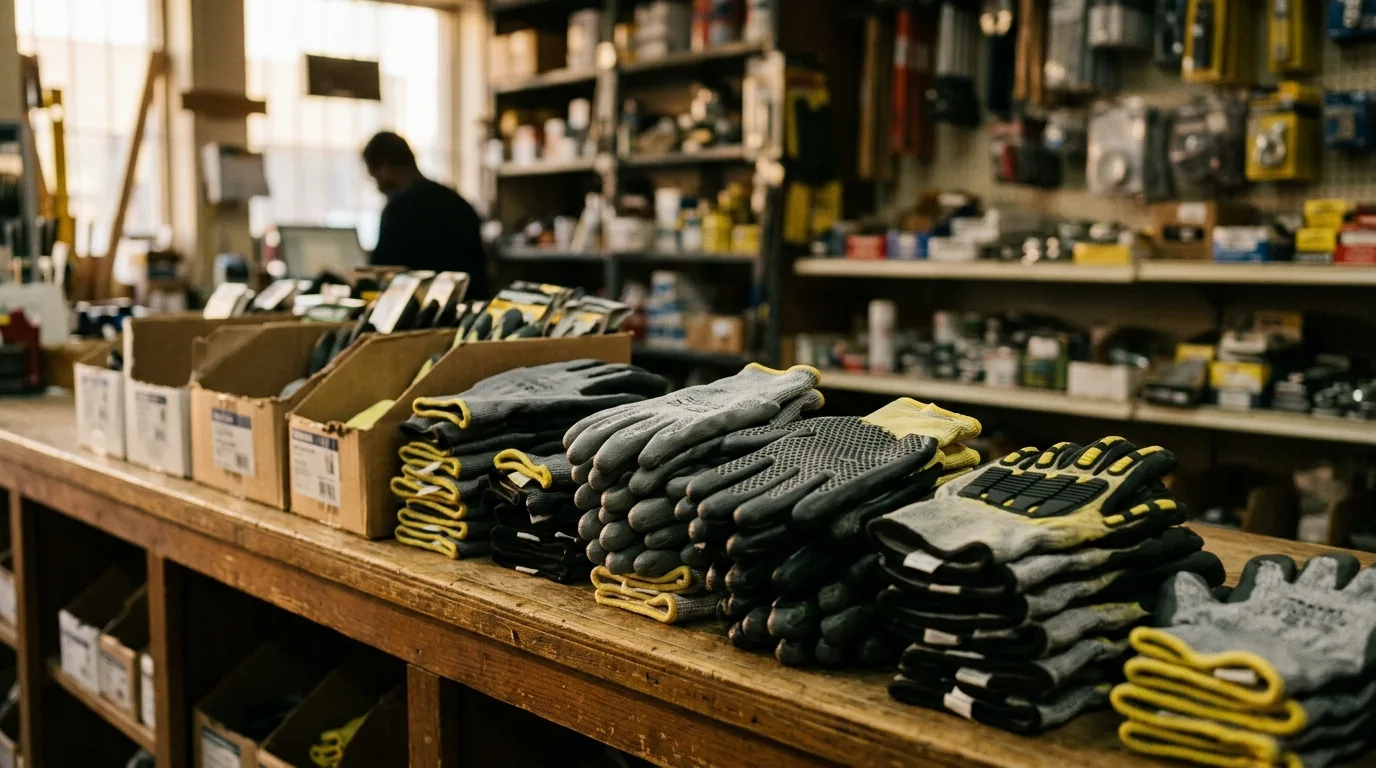
Cut-resistant gloves in Staten Island are stocked deep at Quazi Supply, 519 Port Richmond Avenue. We carry ANSI A1 through A9 cut-resistant gloves — synthetic palm coatings, grip dots, dipped nitrile, and full leather varieties — in the size run from small through XXL. Open 11 to 8, seven days. Volume pricing on dozens, fleet accounts for crews ordering monthly.
Cut-resistant gloves are rated by the ANSI/ISEA 105 cut score, which runs from A1 (lowest cut resistance) to A9 (highest). The number tells you how many grams of force a 25 mm blade has to apply before it cuts through the glove. A1 is rated for 200 to 499 grams. A9 is rated for 6,000 grams or more. Higher number, more cut resistance — but also less dexterity and more cost.
Picking the right level matters because going too high wastes money and reduces hand control, and going too low gets people cut. Here's the breakdown by trade.
A1 to A2: very light cut resistance. Useful for general handling, packaging, light assembly. Most painters, drywall hangers, and finish carpenters can use A2 for handling materials with minimal cut hazard. Around $4 to $8 per pair.
A3 to A4: the construction default. A4 is the floor for general construction, framing, and most trades. Handles sheet metal edges, metal framing studs, broken glass cleanup, and most demolition tasks. Around $6 to $14 per pair. If your foreman says "cut-resistant gloves required" without specifying a level, A4 is the safe answer.
A5 to A6: heavy-duty cut protection. A6 is the right level for sheet metal workers, HVAC ductwork, glass handling, and metal fabrication. The fabric is denser and the grip is usually polyurethane or nitrile coated. Around $10 to $20 per pair.
A7 to A9: extreme cut resistance. A9 is for glass installers, precast concrete handlers (the rebar and wire mesh edges are murderous), and metal recycling. Built with high-strength polyethylene, glass fiber, or steel mesh blends. Around $20 to $40 per pair.
Now, on coatings. The palm coating affects grip and durability separately from cut rating. Five common types.
Polyurethane (PU) is the most popular general-purpose coating. Smooth grip, light, breathable, good for dry conditions. Bad in oil or wet conditions. Most A3 to A5 gloves use PU.
Nitrile is the next step up. Better in oil, decent in wet, rougher grip. Most A4 to A6 gloves with regular wet exposure use nitrile coatings.
Latex provides the best dry grip but degrades in oil and breaks down faster. Less common in modern construction gloves but still used on some economy lines.
Foam nitrile is a textured nitrile coating with a foam layer that absorbs oil and provides grip in wet conditions. Common on the higher-cut-rated gloves where wet hazards stack on top of cut hazards.
Sandy nitrile and gritty PU coatings have actual grit particles embedded in the coating for extreme grip on wet, oily, or smooth surfaces. Used by metal fabricators handling oily steel and by HVAC techs dealing with refrigerant lines.
Grip dots — those small rubber dots on the palm and fingertips — add tactile grip on top of the coating. Useful when you're handling small fasteners, screws, or anything you need to pinch grip. Some lines have grip dots only on the fingertips, others have full-palm coverage.
Sizing. Cut-resistant gloves run small if they don't fit right. Most failures we see at the counter are guys wearing gloves a size too big — the glove slides on the hand under load, the grip fails, and they cut themselves through the loose material. Try them on. Make a fist. The glove should be snug across the knuckles without binding the fingers. If the fingertip extends more than an eighth of an inch past your fingernail, size down.
Replacement schedule. Cut-resistant gloves degrade with wear. The cut rating drops as the fabric thins and the coating wears off. Visible holes, fraying at the seams, or coating peeling off the palm means the rating is gone — replace them. Most A4 gloves last two to four weeks of daily wear. A6 and above lasts longer because the fabric is denser. Cheap A2 gloves are essentially disposable and most crews go through them in a week.
On washing: cut-resistant gloves can usually be machine washed cold and air-dried. Don't use hot water (degrades the polyethylene fibers) and don't use the dryer on high heat. Some coated gloves shouldn't be washed at all — the coating cracks. Check the tag.
On chemical resistance: cut-resistant gloves are usually not chemical-resistant. If you're handling solvents, oils, or chemicals along with cut hazards, you need a glove rated for both — typically a nitrile-dipped cut-resistant glove with a sealed cuff. Don't assume a high cut rating means chemical protection.
We stock multiple brands and price points: economy A2 and A4 lines for $4 to $8 a pair (good for crews that go through a dozen pairs a week), mid-tier A4 to A6 for $10 to $18, and premium A6 to A9 for $20 to $40. Volume pricing on a dozen pairs or more.
We're at 519 Port Richmond Avenue, Staten Island. Open 11 to 8, every day. The glove wall is to the right of the boot wall in the back. Bring your old gloves if you can — easier to figure out the right replacement size and rating.